
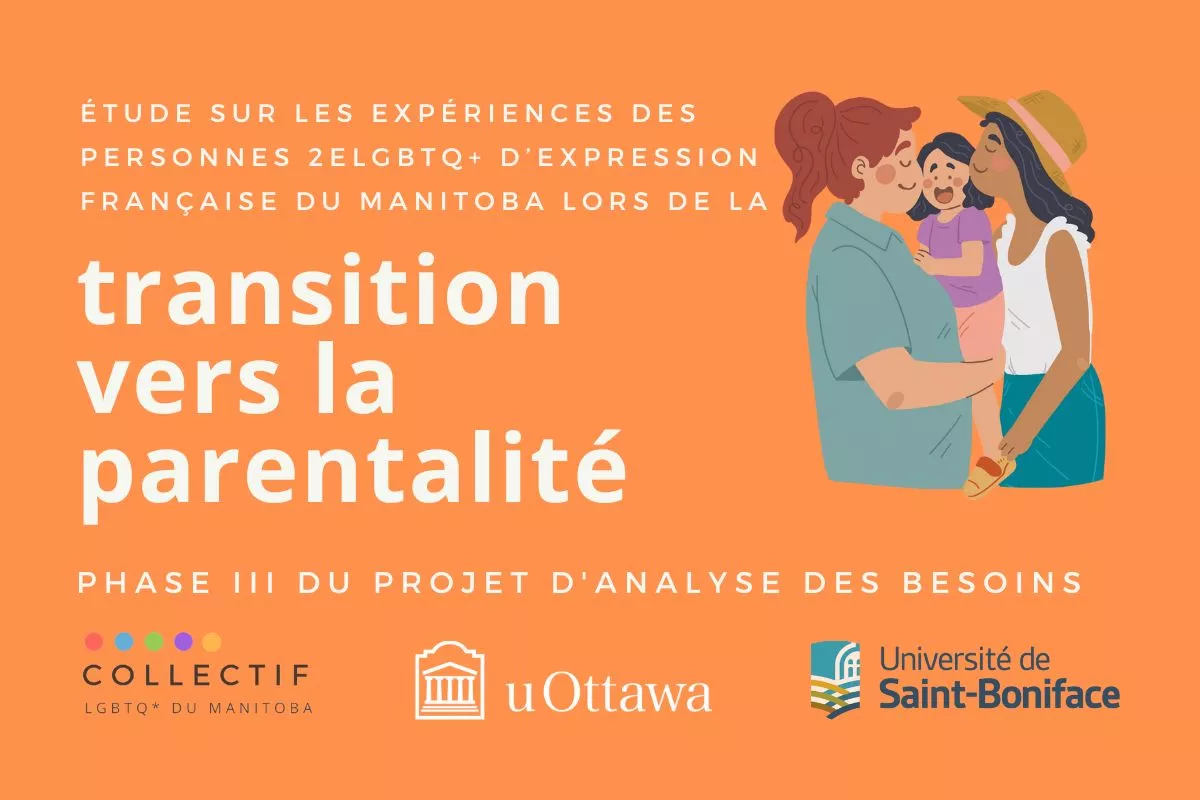
Parenthood Study

Becoming a parent is not a given for members of our community. Phase III of the needs assessment project focuses specifically on the needs, challenges, and concerns of 2SLGBTQ+ individuals during the transition to parenthood.

Objective of Phase III: Parenthood

This study seeks to better understand the experiences of French-speaking 2SLGBTQ+ individuals who become parents. The transition to parenthood is a very significant period of vulnerability. Indeed, several studies illustrate the psychological, physical, emotional, social, and sexual changes that can affect parents during this transition. According to research to date, intimacy and sexuality are the two most affected dimensions because this transition requires reconciling several roles, notably that of parent, lover, and partner.

French-speaking 2ELGBTQ+ individuals living in a linguistic minority context face unique challenges related, in part, to discrimination when accessing health and social services. Despite these challenges, few studies have examined the experiences of those who seek or choose to become parents.

This study seeks to answer the following questions:

  • What are the perceptions of French-speaking 2SLGBTQ+ parents regarding the transition to parenthood concerning the reconciliation of their roles (parent, partner, and lover)?
  • How does the dual identity, Francophone and 2SLGBTQ+, affect the transition to parenthood?
  • What are the perceptions of French-speaking 2SLGBTQ+ parents during their interactions with care providers during the transition to parenthood?
IPA Methodology

This study will be conducted through interviews with the principal researcher. This approach is called interpretative phenomenological analysis (IPA). The goal of IPA is to explore lived experience while attempting to understand how participants interpret the phenomenon under study. IPA allows for contextualizing information while leaving room for individual experience.

As with other studies undertaken as part of the research agreement signed in 2019 between the Collective and the Université de Saint-Boniface (USB), this one provides for the active involvement of community members in all stages of the research. This participation serves several purposes. It allows for better alignment of research with the needs and priorities of community members, thus facilitating the application of new knowledge. Investing in a research project also means taking ownership of the research results: it is the empowerment of parents (or those who wish to become parents) in the French-speaking 2ELGBTQ+ community that is fostered by phase III of the needs analysis project.

Our Partners

The parenthood study is part of the Collectives multi-year needs assessment project. In addition to scientists from the Université de Saint-Boniface, the University of Manitoba, and the University of Ottawa who participate in the research, numerous partners – individuals and organizations – contribute to the Collectives project by providing financial or human resources, logistical or organizational assistance, a letter of support, advice, or even simple moral support. The Collective wishes to thank them for their unwavering commitment to the 2SLGBTQ+ community of Manitoba.